Working remotely does not have to mean working from the same desk every day. A workation, a longer stay somewhere new where you keep working your normal hours, lets you live like a local, explore on evenings and weekends, and come home with more than a handful of photos. It also comes with practical challenges that a short vacation never tests: internet reliability, a comfortable workspace, time-zone juggling, visas and a budget that has to last for weeks. This guide walks through each one so you can plan a long stay that works as well as it feels.

Key takeaways
- Stays of 30 nights or more often qualify for monthly pricing, which can bring the nightly cost down significantly.
- Never assume the Wi-Fi is good enough. Ask the host for a recent speed test and keep a mobile data backup.
- A real desk, a supportive chair and good light matter more over four weeks than any view.
- Check your time-zone overlap with your team before you choose a destination.
- Visa rules for remote work vary. Some countries, including the UAE, offer remote-work visa programs, so always verify with official sources.
Why a long stay beats hopping around
It is tempting to try to see five cities in a month. For remote workers, that usually means spending evenings packing, losing working hours to travel days and constantly adapting to a new workspace. Staying in one home for several weeks gives you time to settle in, find your favorite cafe, learn the grocery store layout and build a routine that keeps you productive. You still get to explore, just at a slower and more rewarding pace.
Longer stays are also kinder to your budget and to the destination, since one cleaning and one set of travel days are spread across many nights.
Understanding monthly rates
Many hosts set lower prices for longer bookings because a month-long guest means fewer turnovers, fewer cleaning fees and less time spent managing check-ins. On Bed N Beds, look for monthly pricing on listings: hosts can set a reduced rate for stays of 30 nights or more, and some also offer weekly pricing for stays of seven nights or more.
When comparing homes, calculate the total cost for your full stay rather than the nightly headline. Include cleaning fees, taxes and any utility caps mentioned in the house rules. If a home you love does not show a monthly price, it is perfectly reasonable to send a polite message asking whether the host would consider one for your dates.
Wi-Fi: the non-negotiable
A beautiful apartment with weak internet will ruin a workation faster than anything else. Do not rely on a listing that simply says Wi-Fi. Before you book:
- Ask for a speed test. Request a recent screenshot from a speed test app, taken from inside the home, showing both download and upload speeds. Upload speed matters most for video calls and sending large files.
- Ask about the connection type. Fiber or cable broadband is generally more stable than shared or mobile connections.
- Ask where the router is. In larger homes, the signal can weaken in rooms far from the router. Check whether the workspace is close to it, and whether an ethernet cable or mesh system is available.
- Ask about outages. A host who has hosted other remote workers will often know how reliable the service is.
Always have a backup. A local SIM or eSIM with a generous data plan lets you hotspot from your phone if the main connection fails during an important call. It is also worth noting a nearby coworking space or cafe with reliable internet as a fallback.

Building an ergonomic workspace
Working from a sofa or a dining stool is fine for a weekend. Over four weeks, it can lead to sore shoulders, a stiff neck and lower productivity. When you assess a home, look for these features or ask the host about them:
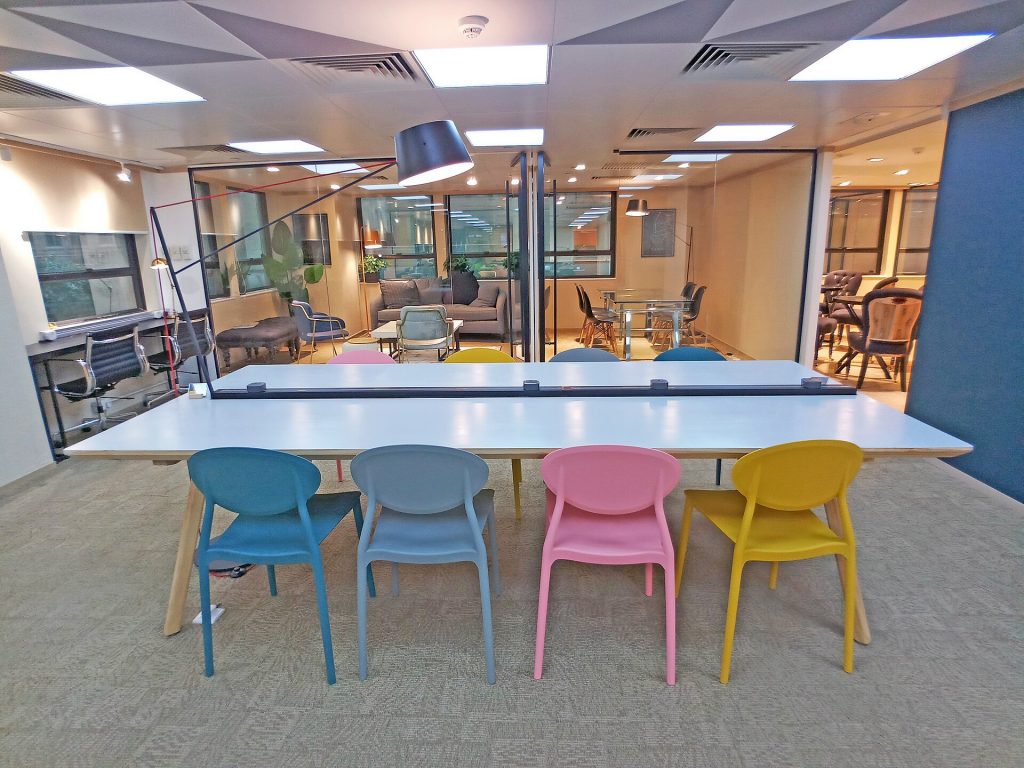
- A dedicated desk or table at a comfortable height, ideally in a quiet room or corner.
- A chair with back support. If the photos only show bar stools, ask.
- Good natural light without glare on your screen, plus a lamp for evenings.
- Enough power outlets near the workspace, and the right plug adapter for your devices.
- A door you can close for calls, especially if you are traveling with a partner or family.
Pack a few small items that make a big difference: a compact laptop stand, a wireless keyboard and mouse, noise-canceling headphones and a short extension cord. Together they turn almost any table into a workable office. Our vacation rental packing list covers the rest of the essentials.
Managing time zones
Time zones can make or break a remote work trip. Before choosing a destination, map out how your working hours will overlap with your team and clients.
- Find your overlap window. Identify the hours when you must be online for meetings, then check what those hours look like locally. A destination where key calls fall at 2 a.m. will wear you down quickly.
- Use the difference to your advantage. Being ahead of your team can give you quiet focus time in the morning and free afternoons to explore before meetings start.
- Watch daylight saving changes. Different countries change clocks on different dates, or not at all. The UAE, for example, does not observe daylight saving time, so its difference from Europe and North America shifts during the year.
- Set your calendar to show two zones. It prevents missed meetings and awkward early-morning surprises.

Visas and working legally
Entering a country as a tourist does not always mean you are permitted to work there, even remotely for an employer back home. Rules depend on your nationality, your destination, the length of your stay and the nature of your work, and they change over time.
A growing number of countries now offer dedicated remote-work or digital nomad visas designed for people employed or self-employed abroad. The United Arab Emirates, for example, offers a remote-work visa program that allows eligible professionals to live in the country while working for an employer outside it. If Dubai is on your list, our Dubai first-time visitor guide is a good place to start planning.
Budgeting for a month away
A workation budget looks different from a vacation budget because you are living, not just visiting. Plan for:
| Category | What to consider |
|---|---|
| Accommodation | Monthly rate, cleaning fees, taxes and any utility limits |
| Connectivity | Local SIM or eSIM data plan, occasional coworking day passes |
| Food | Mostly groceries and home cooking, plus a few meals out each week |
| Transport | Monthly transit passes, ride-hailing, occasional car rental for day trips |
| Insurance | Health and travel cover that includes long stays and remote work |
| Leisure | Weekend trips, classes, gym membership, attractions |
Cooking at home is the single biggest saving on a long stay, so choose a home with a properly equipped kitchen. Many cities also offer monthly transit passes and gym memberships that work out far cheaper than paying per visit.
Creating a routine that works
The biggest risk on a workation is not too little fun, it is blurred boundaries. Without a commute, work can creep into every hour, or the temptation to explore can swallow working time. A simple structure helps:
- Set fixed working hours and share them with anyone traveling with you.
- Create a start and end ritual, such as a morning walk to a cafe and an evening stroll once the laptop closes.
- Protect your weekends for exploring, and plan day trips in advance so they actually happen.
- Spend your first weekend settling in. Find the supermarket, pharmacy, laundry, a gym and a backup place to work.
- Keep moving. Walk or cycle to explore your neighborhood instead of sitting all day.
Finding community
Long stays can feel isolating, especially if you are traveling alone. Build connection into your plans: try a coworking space a few days a week, join a running club or yoga studio, book a cooking or language class, or look for local meetups for remote workers and expats. Your host can also be a great source of recommendations. A neighborhood with cafes, parks and markets within walking distance makes it much easier to feel part of daily life.
Your workation checklist
- Choose a destination with workable time-zone overlap and a visa route that fits your situation.
- Shortlist homes with a real workspace and look for monthly pricing.
- Ask each host for a Wi-Fi speed test and a photo of the work area.
- Arrange a mobile data backup and note a nearby coworking space.
- Confirm insurance, visas and any tax considerations through official sources.
- Plan your first week: groceries, transport pass and a simple routine.
If you are new to booking homes, our guide to how Bed N Beds works explains requests, payments and messaging with hosts.
Find a home for your next workation
Browse hand-picked homes, compare monthly pricing for stays of 30 nights or more, and message hosts directly about Wi-Fi and workspace before you book.
Frequently Asked Questions
What counts as a long stay?
Most hosts treat stays of 30 nights or more as long stays, and many offer monthly pricing at that point. Some also offer weekly discounts for stays of seven nights or more. Check each listing for the rates that apply to your dates.
How fast should the Wi-Fi be for remote work?
It depends on your work. Email and documents need very little, while frequent video calls, large uploads or streaming need a reliable connection with solid upload speed. Ask the host for a recent speed test screenshot showing both download and upload, and keep a mobile data backup.
Do I need a special visa to work remotely abroad?
It depends on your nationality, your destination and the nature of your work. Some countries offer dedicated remote-work or digital nomad visas, including the United Arab Emirates. Always confirm the requirements with the official government sources of your destination before you travel.
Can I ask a host to add a desk or a better chair?
Yes, it is worth asking before you book. Many hosts are happy to accommodate long-stay guests with a desk, a supportive chair or a monitor, especially for stays of a month or more. Confirm any agreement in writing through the platform.
How do I avoid feeling isolated on a long workation?
Build a routine that includes people. Try coworking spaces, fitness classes, language lessons, volunteer opportunities or local meetups, and choose a neighborhood with cafes and parks within walking distance.